
The way to build a budget that lasts is to match it to your real life and keep using it. Strict plans tend to get abandoned by the second month. Aim for a simple plan you check often and adjust as you go.
Start with your goals
Before you build a budget, decide what it’s for. A clear goal makes it easier to say no to spending that doesn’t matter to you.
- Short-term: paying off a credit card, building a $1,000 emergency fund, saving for a trip
- Medium-term: a car, school costs, a down payment
- Long-term: retirement, investing
Track a month of income and spending
List every source of take-home pay: your paycheck after taxes, plus side income. Then pull the last 30 days from your bank and card statements and sort each charge:
- Fixed: rent, utilities, insurance, loan payments
- Variable: groceries, gas, transportation
- Discretionary: dining out, entertainment, hobbies, shopping
Most people find at least one category where they spend more than they thought. Small repeat charges add up fast: a $6 coffee on workdays comes to about $130 a month. You don’t have to cut it, but you should decide on it rather than find it later.
If your income varies, use your lowest month from the past year as your starting number. Anything above that is a bonus you can assign once it arrives.
Pick a budgeting method
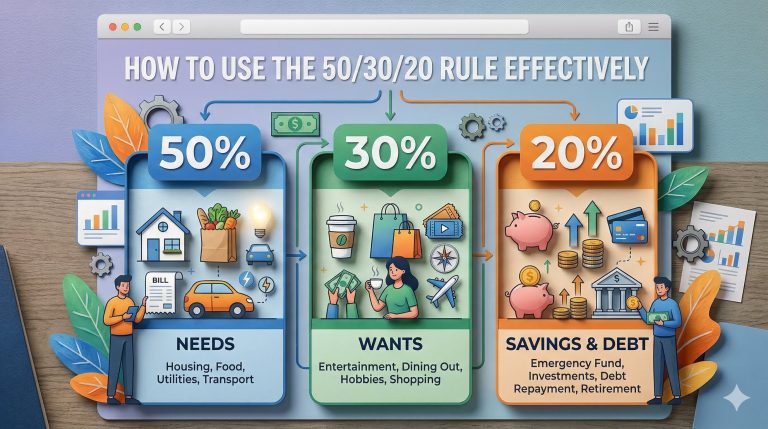
- 50/30/20: about 50% of take-home pay to needs, 30% to wants, 20% to savings and extra debt payments. See how to use the 50/30/20 rule.
- Zero-based: every dollar gets a job until income minus spending, saving, and debt payments equals zero. See zero-based budgeting explained.
- Envelopes: a fixed amount, in cash or a digital category, for the areas where you overspend. See how to use cash envelopes.
Try one for a month. If it feels like a chore you skip, switch.
A sample budget
The easiest way to build a budget is to start from an example. On $3,200 a month in take-home pay, a 50/30/20 budget might look like this:
- Needs, $1,600: rent $1,100, utilities and phone $180, groceries $220, gas and insurance $100
- Wants, $960: dining out, streaming, clothes, hobbies, a trip fund
- Savings and debt, $640: $300 to an emergency fund, $340 extra on a credit card
In many cities rent alone takes more than half of take-home pay. That’s common, and it doesn’t mean the budget has failed. Shift the percentages to something like 60/20/20 or 65/25/10 and keep going. The split matters less than knowing where each dollar goes.
Build a budget with categories that fit your life
Start with the basics and add what’s specific to you:
- Housing and utilities
- Transportation
- Food and groceries
- Debt payments
- Savings
- Fun money
Give yourself a small “fun money” line. A budget with zero room for enjoyment is the kind people quit.
Plan for irregular costs
Car repairs, annual subscriptions, gifts, and school supplies don’t show up every month, so they break budgets that ignore them. Add up the yearly total, divide by 12, and set that aside each month. Our guide to sinking funds explains how.
When the numbers don’t add up
If your spending is higher than your income, you have three levers:
- Cut costs. Start with the big fixed bills, since one change keeps saving every month. Shop your car insurance, switch phone plans, or look at a roommate or a cheaper place when your lease ends.
- Trim variable spending. Set a weekly grocery limit, cook more at home, and pause subscriptions you haven’t used in a month.
- Raise income. Extra shifts, a side job, or selling things you don’t use can close a gap faster than cutting alone.
If you’re behind on essentials, call 211 or visit 211.org to find local help with rent, utilities, and food.
Automate what you can
- Schedule a transfer to savings on payday
- Set up autopay for fixed bills to avoid late fees
- Use your bank’s alerts or a budgeting app to sort spending for you
Budgeting with a partner
If you share expenses, decide together how you’ll split them: 50/50, in proportion to income, or everything pooled. Many couples use a joint account for shared bills and keep separate accounts for personal spending, so neither person has to explain every coffee. Whatever you choose, look at the numbers together once a month.
Review once a month
Spend 15 minutes comparing what you planned with what you spent. Move money between categories, and raise savings when you can. Our monthly money check-in gives you a short list of questions to go through.
How to stick with it
Most budgets fail because they take too much effort, not because the math is wrong. A few habits help:
- Pick one day a week to check your balances, even for five minutes
- Keep the number of categories small, around eight to ten
- When you overspend in one category, move money from another instead of giving up on the month
- Celebrate small wins, like a paid-off card or your first $500 saved
Your first two or three months will be rough guesses. By the third month, the numbers usually get close to real life.
Common mistakes
- Making it too strict. Leave some room, or you’ll give up on it.
- Forgetting irregular expenses. Plan for them with sinking funds.
- Skipping the review. A budget you never check drifts away from reality.
- Leaving out savings. Even $20 a paycheck builds a buffer. Our emergency fund guide shows how to start.
If you want to build a budget without doing the math by hand, the monthly budget planner does it for you. If your pay changes month to month, read how to budget with irregular income. For more, visit the Budget Center.
Revised: September 2026
This article is general education, not financial, legal, or tax advice. Your situation may differ, so check the details with the lender, agency, or a qualified professional before you act. How we research and review articles.
One Comment