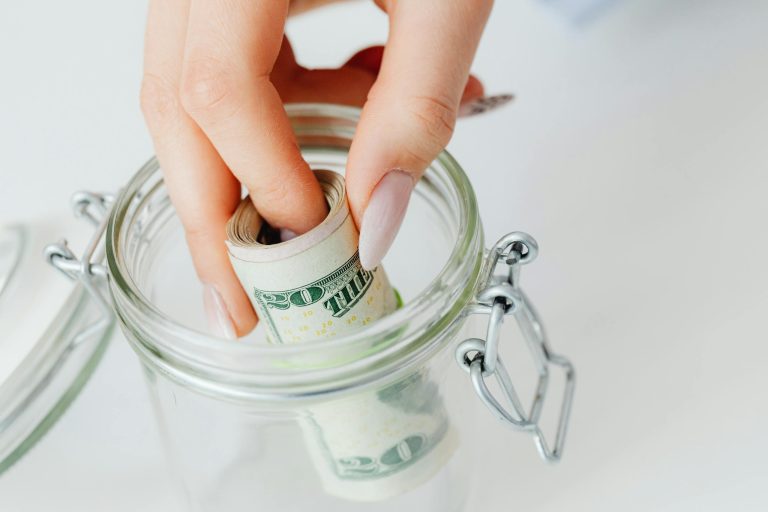
Cash stuffing turned a decades-old envelope system into a viral habit. Videos tagged #cashstuffing and #cashenvelopes have racked up billions of views. The appeal isn’t the washi tape or the aesthetic. Physically running out of cash in an envelope is a harder limit than a number on a banking app that keeps letting the swipe go through.
Why the physical version still works
The mechanics are simple. Withdraw a paycheck’s worth of spending money. Divide it into envelopes labeled for groceries, gas, entertainment. Stop spending in a category once its envelope is empty. The friction is the entire point. Digital budgeting apps can track the same categories, but a $0.00 balance in an app rarely stops a card from being charged. An empty envelope does.
That friction matters more now than it did a few years ago. According to the Federal Reserve’s 2025 Survey of Household Economics and Decision-making, only 63% of U.S. adults said they could cover a surprise $400 expense with cash, down from 68% in 2021. Separately, PYMNTS Intelligence reported that 68% of Americans were living paycheck to paycheck as of August 2025. When the margin for error is that thin, a system that makes overspending physically impossible has real appeal beyond the novelty.
A financial coach who teaches cash stuffing to clients told me the system’s real value isn’t the envelopes themselves. It’s the moment of hesitation when you open an envelope and see it’s empty. That half-second pause is what stops the purchase. Apps don’t create that pause, because there’s no physical barrier between you and the transaction.
Where digital envelope apps catch up
Digital envelope-style budgeting, offered by apps that let you allocate every deposit into virtual categories, solves cash stuffing’s biggest practical problem. Nobody wants to carry $600 in an envelope, and cash can’t be used for rent, subscriptions, or most online purchases. Digital versions keep the category-based discipline while working for the parts of a budget that were never going to be cash in the first place.
The tradeoff is that digital systems only work if you actually respect the category limit instead of treating it as a suggestion. A locked envelope enforces the limit automatically. A banking app dashboard requires the same self-control it was supposed to replace. A product manager at a budgeting app company admitted to me that their internal data shows most users who set category limits eventually override them. The limit becomes advisory, not binding.
For people who have tried apps before and kept overspending anyway, the physical version’s forced stop is worth the inconvenience of carrying cash.
Choosing based on the actual failure point
The right choice depends on where your budget tends to break down. If bills and subscriptions are the problem, a digital system that automates those categories will do more good than cash ever could. If the leak is discretionary spending, dining out, impulse buys, retail therapy, a physical envelope for just those categories, paired with digital tools for the fixed expenses, tends to outperform either method alone. For a broader walkthrough of the classic cash approach, see this guide to the cash envelope budgeting method.
The most common mistake I’ve observed is trying to run the entire budget on one system. People who stick with envelope budgeting long-term usually use a hybrid. Digital for fixed bills, cash for the categories where they know they’re weak.
Neither system is a fad or a fix on its own. Both are just structures for enforcing a decision you already made on paper. The one that wins in 2026 is whichever one you’ll actually stick with past the first difficult week.